Pakistan is constitutionally a democratic republic, but its political landscape has reflected traits of authoritarian regimes, which include military dominance, civil rights restrictions, and controlled media and judiciary.
According to The Economist Intelligence Unit’s 2024 Democracy Index, Pakistan secured position 124 out of 167 countries while achieving a total score of 2.84. Under the “top 10 worst performers” category, Pakistan maintains its position,indicating weakening democratic standards.
The 2024 Freedom House evaluation placed Pakistan under the “partly free” designation, with combined political rights and civil liberties scoring 35 out of 100.
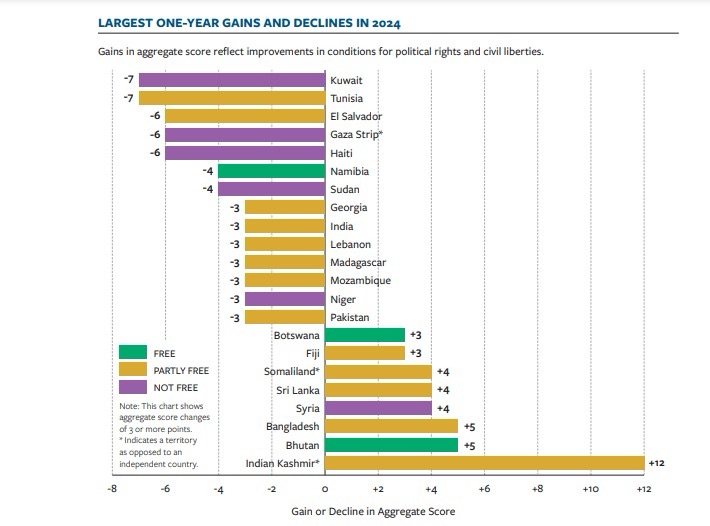
The specified categorization demonstrates that Pakistan presently maintains ongoing limitations that affect freedom of expression, together with assembly and press freedoms. Many media persons have been off-air due to their views; the top example of that is KashifAbbassi, an ARY TV show host who was off-air recently this year.
Moreover, social networking apps like X have been banned in Pakistan. And many YouTube channels are not accessible in Pakistan. A new peca law has also been passed by the ruling elite to control the media.
The Pakistani military holds ongoing influence over Pakistan’s political processes. New legislation has lengthened the term for army chief positions from three to five years, along with successive extension possibilities, which has strengthened military control. The judicial independence is endangered because of recent amendments that granted senior judges appointment power to government committees.
A 26th amendment has been passed for judicial reforms that is being criticized by the opposition and many judicial related personnals saying its an attack on judiciary and is being done to control the judicial system by the government and the military establishment.
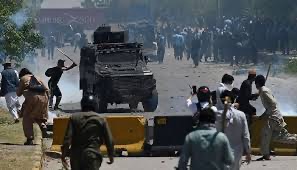
Political opposition suffers from severe suppression when viewing how former Prime Minister Imran Khan has been treated. The ongoing public gains in support for Imran Khan prove his judicial detainment and over 100 charges have not silenced his influence on popular opinion while protesters call for his freedom and the end of the existing government. The government enacted heavy crackdowns and limited media freedoms to suppress protests as an indication of authoritarian rule.
The current political atmosphere in Pakistan demonstrates features of authoritarian rule through its reduced democratic processes and curtailed civil liberties, as well as its rising military influence in governance. The nation holds official democratic systems in place, yet national developments indicate a growing trend towards enhanced government control, together with decreasing freedoms of political activity.
References
•Economist Intelligence Unit. (2025). Democracy Index 2024. Retrieved from https://www.eiu.com/n/campaigns/democracy-index-2024/
•Freedom House. (2024). Pakistan: Freedom in the World 2024 Country Report. Retrieved from https://freedomhouse.org/country/pakistan/freedom-world/2024
•International Commission of Jurists. (2024). Pakistan: 26th Constitutional Amendment is a blow to the independence of the judiciary. Retrieved from https://www.icj.org/pakistan-26th-constitutional-amendment-is-a-blow-to-the-independence-of-the-judiciary/
•Reuters. (2024). Pakistani journalist probing Imran Khan protest casualties charged. Retrieved from https://www.reuters.com/world/asia-pacific/pakistani-journalist-probing-imran-khan-protest-casualties-charged-with-2024-11-28/
•The Guardian. (2024). Pakistan’s government curbs judiciary’s power after alleged harassment of MPs. Retrieved from https://www.theguardian.com/world/2024/oct/21/pakistans-government-curbs-judiciarys-power-after-alleged-harassment-of-mps
 Site Title